Nomad RV Mattress Upgrade: Why We Replaced Our Factory Mattress
Some of the links below are affiliate links, which means we will earn a commission on the products or services you purchase using the links. There is no additional cost to you, and the earnings help keep this website running.
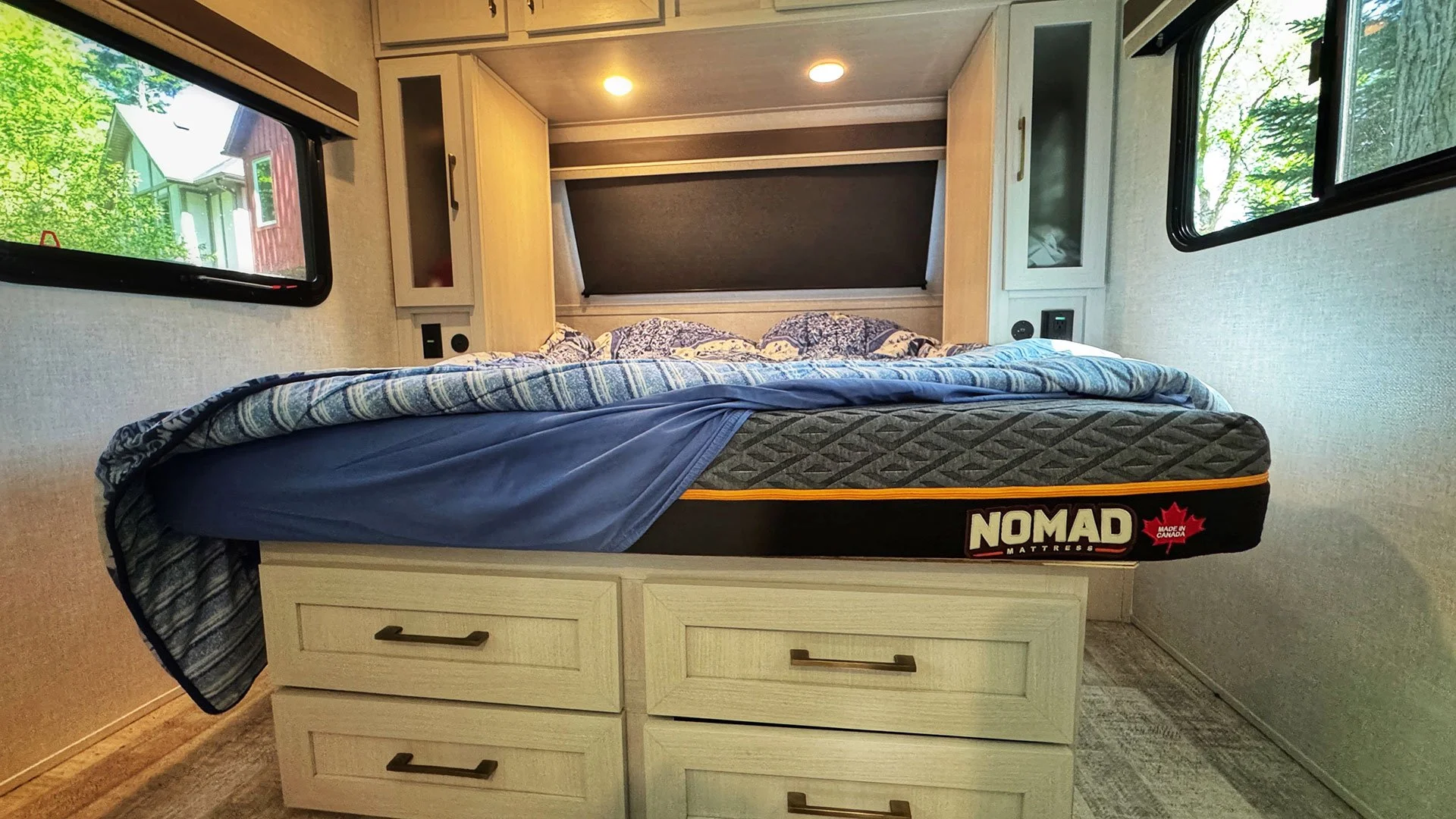
Sleep better on the road with a Nomad RV mattress upgrade.
One of the best things about RV travel is that you can bring your own bed wherever you go. Whether it’s a quiet lakeside campground, a forested provincial park, or a simple overnight stop along a road trip, the comfort of your RV can make those adventures even better.
At least, that’s the idea.
The reality is that many RV owners quickly discover that the mattress that comes with their trailer isn’t exactly built for comfort. Ours certainly wasn’t.
At first, the mattress looked and felt just good enough, but after a few nights' sleep, we noticed it was starting to break down. After a dozen nights, we could feel the platform underneath with every turn, and by night twenty, we realized that if we wanted to continue enjoying long trips and active days outdoors, something had to change.
The mattress had to go.
Here’s why we decided to replace our factory RV mattress, what to look for when upgrading yours, and why we ultimately chose the Nomad RV mattress.
Shop Nomad Mattress
The Truth About Most RV Mattresses
If you’ve spent a few nights in your RV and woken up feeling stiff or sore, you’re not alone.
Most factory RV mattresses are built with one goal in mind: keeping costs low and weight down. Comfort, unfortunately, isn’t always the top priority.
Typical factory mattresses tend to have a few common issues:
Thin foam construction
Minimal support
Noticeable sagging over time
Limited breathability in warm weather
In many cases, the mattress feels more like a camping pad than a bed designed for restful sleep.
Our travel trailer mattress looked fine at first glance, but it didn’t take long for us to notice the problems. The sleeping spot compressed quickly, we could feel the firmness of the bed platform underneath, and after a few nights on the road, we often woke up feeling like we hadn’t slept well at all.
When your days are filled with cycling, hiking, paddling, or exploring new places, good sleep becomes pretty important.
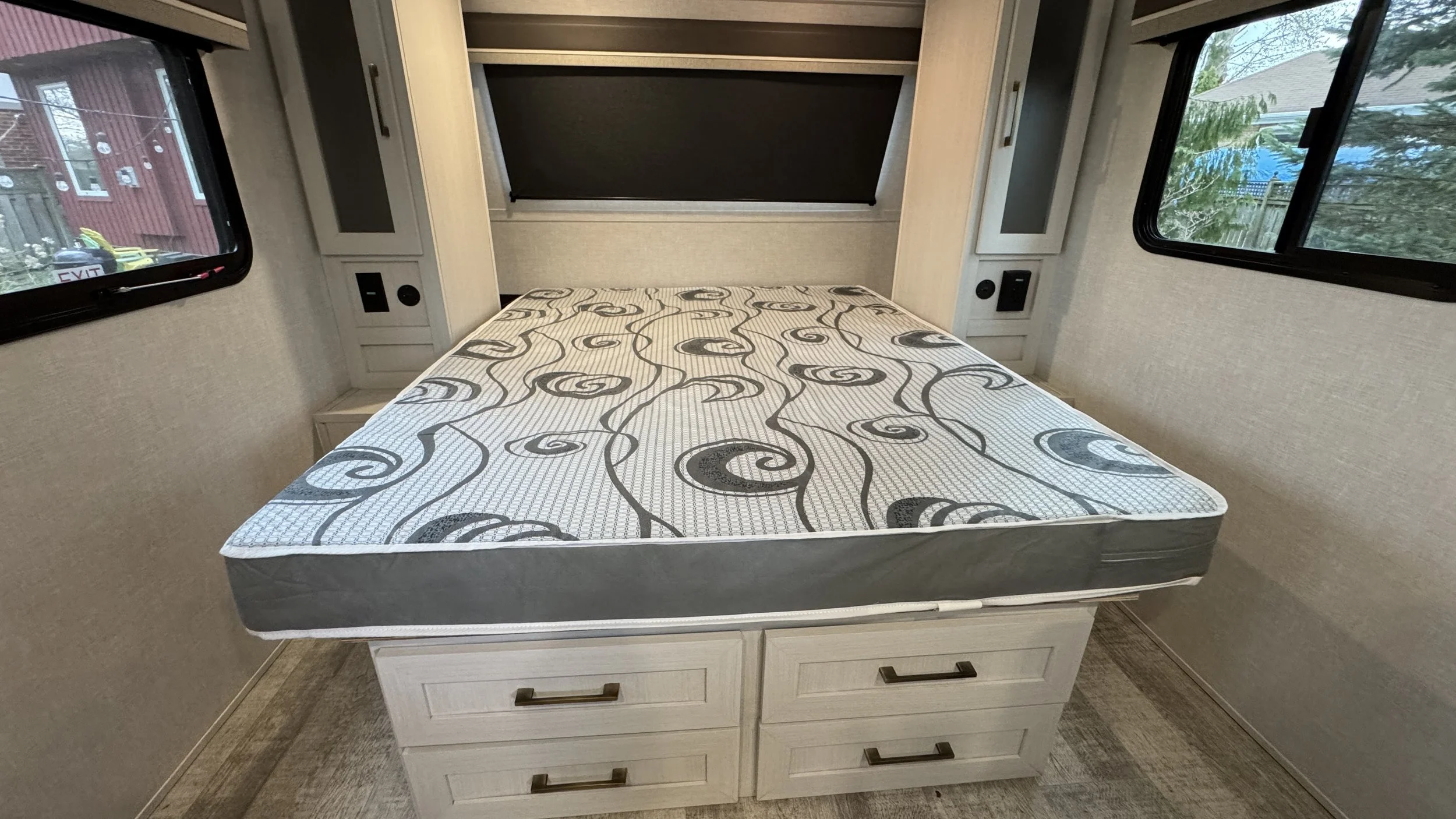
To be honest, our first impression of the mattress in our new No-Bo 19.4 was “looks OK”. Coming from years of sleeping on a piece of foam in our pop-up camper, this seemed like an upgrade. For the first few nights, sleep was comfortable. By night 10, the mattress was starting to collapse. Rolling over your hips felt the plywood underneath, making morning stretches necessary. By night 20, we were done with it — time for an upgrade.
Signs It Might Be Time to Replace Your RV Mattress
Many RV owners eventually decide to upgrade their mattress, especially if they spend more than just a few nights each year camping.
Here are a few signs it may be time for a replacement:
You wake up stiff or sore.
If mornings start with aching backs or shoulders, your mattress may not be providing enough support.
You can feel the bed platform underneath.
Thin foam mattresses compress quickly and lose their cushioning.
The mattress sags in the middle.
Low-density foam often breaks down faster than a proper mattress.
You toss and turn all night.
Poor support can make it difficult to get comfortable.
You’re planning longer RV trips.
A better mattress becomes more important when you’re spending weeks on the road instead of just weekends.
For us, it was a combination of all these factors. After a few longer trips, we realized that upgrading our mattress would likely make a big difference in how we felt on the road.
What to Look for in an RV Mattress Upgrade
Replacing an RV mattress isn’t always as simple as buying one from a typical mattress store. RV beds often use slightly different sizes, and the space inside a trailer can be limited.
Here are a few things worth considering when choosing a replacement mattress.
RV-Specific Sizes
Many RV beds look like standard queen- or full-size beds, but they are often slightly shorter or narrower. A typical RV queen mattress, for example, is often about five inches shorter than a residential queen.
Before ordering a new mattress, measure your bed platform carefully to ensure the replacement fits properly.
Thickness and Support
One of the biggest improvements you can make is choosing a mattress with more thickness and better support.
A thicker foam or multi-layer mattress can provide better cushioning while still fitting comfortably within the RV’s sleeping space.
Weight and Flexibility
Because RV beds sometimes lift for storage underneath, weight and flexibility can matter. A mattress that’s too heavy or rigid might make accessing storage compartments more difficult.
Temperature Comfort
RV camping often means warm summer nights. A mattress with breathable materials or cooling foam can make sleeping more comfortable in those conditions.
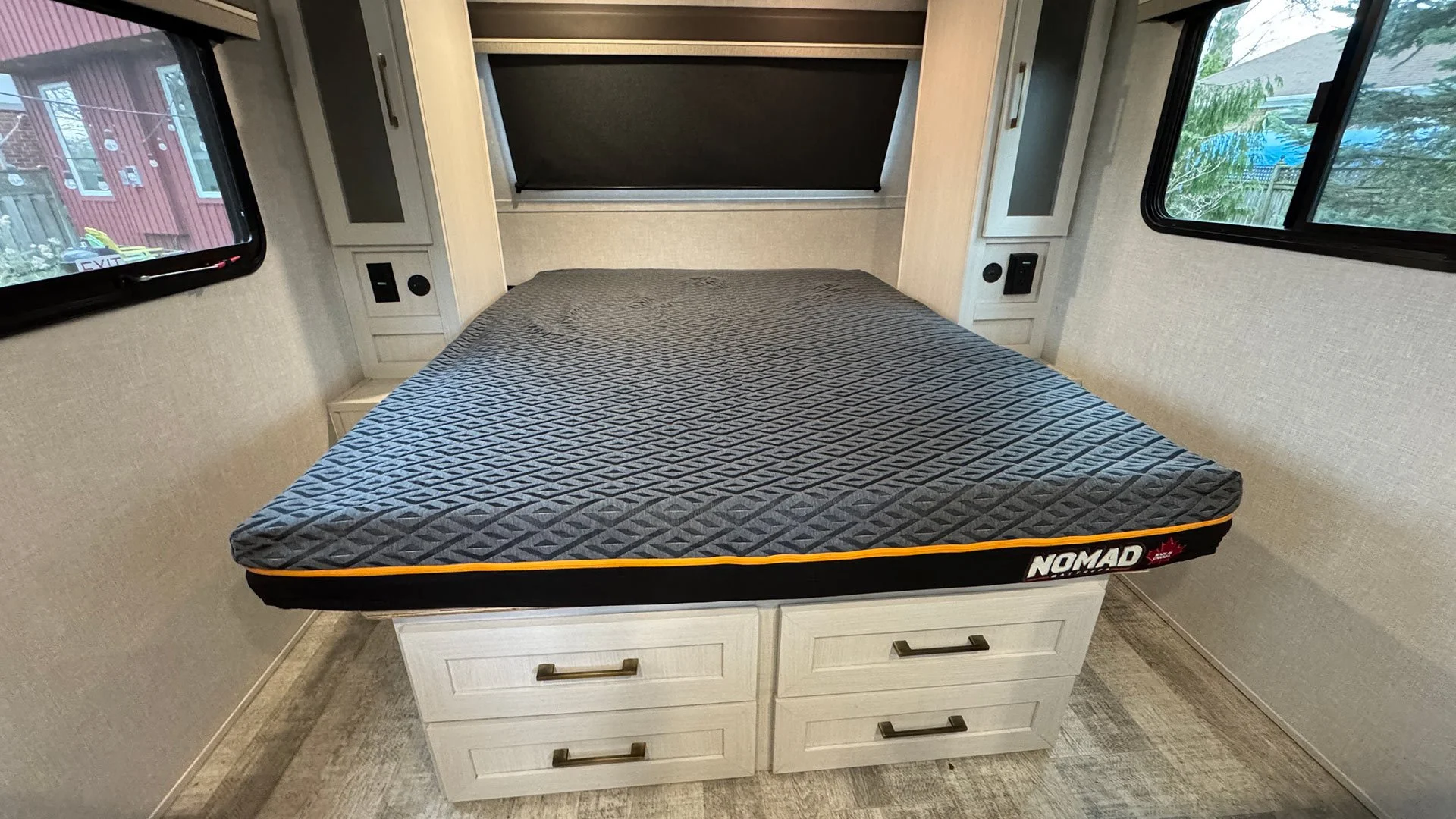
Some RVs have bed dimensions that don’t match standard residential mattresses. Our bed is a full queen, so we could actually use a residential mattress. The reasons we didn’t were: it was heavy, which would increase our towing weight, and we had to lift it to access the underbed storage. While a 10- or 12-inch mattress sounds plush, we didn’t want to have to use a step stool to get in and out of bed.
So why did we choose the Nomad Mattress? It is light, flexible, and not much taller than our original mattress. Plus, they were at the RV show, and a quick try, even just for a minute, helped seal the deal.
Why We Chose the Nomad RV Mattress
After researching several options for replacing our RV mattress, we decided on the Nomad mattress.
One reason it stood out to us is that it’s designed specifically for RV owners. That means it comes in sizes that fit common RV bed platforms, eliminating the guesswork of adapting a residential mattress.
The Nomad mattress also offers a thicker foam construction than most factory mattresses, providing more support and comfort without adding unnecessary bulk.
Another advantage was convenience. The mattress ships compressed in a box, making it easy to handle and install inside the RV.
For a small space like a travel trailer bedroom, the upgrade is much easier than trying to maneuver a full mattress through the door.
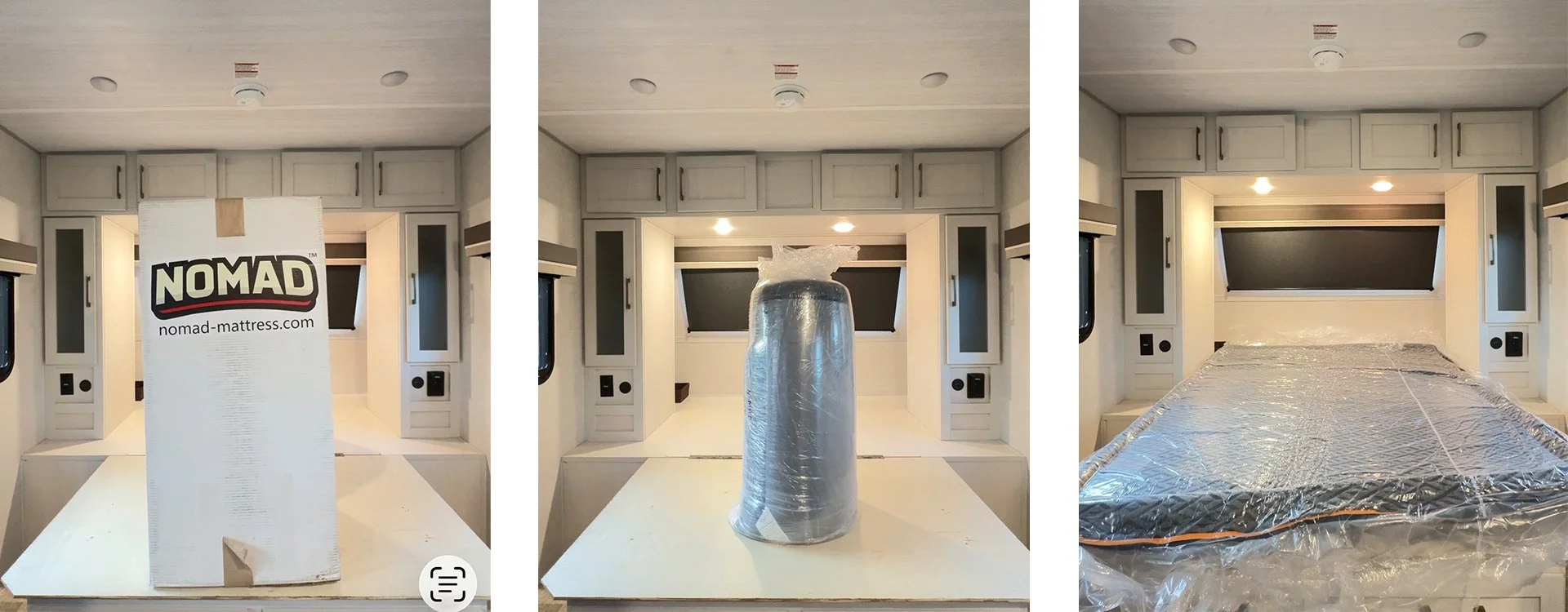
Installation couldn’t have been easier: unbox, unwrap, and watch a good night’s sleep come to life.
Installing the New Mattress in Our RV
One of the things we appreciated most about the process was how simple it was.
After removing the original mattress, we carried the boxed Nomad mattress into the trailer and placed it on the bed platform. Once unwrapped, the mattress began expanding almost immediately.
Within a short time, it had taken its full shape.
From there, it was simply a matter of adding our bedding and making the bed as usual. The entire upgrade took less than half an hour.
For such a small project, it felt like a surprisingly big improvement to the trailer.
First Impressions After Sleeping on It
Of course, the real test of any mattress is how it performs overnight.
From the first night, the difference was noticeable.
The added thickness and support made the bed feel much more like the mattress we sleep on at home. Instead of feeling the platform's firmness, there was proper cushioning and support.
The mattress also felt more stable, which reduced motion transfer when one of us moved during the night.
Perhaps the biggest difference came the next morning.
Instead of waking up stiff and stretching out sore muscles before making coffee, we simply woke up feeling rested.
When your days involve cycling trails, paddling lakes, or wandering small towns, starting the day well-rested makes a noticeable difference.
Additional reading - Life with Our No Boundaries NB19.4 Travel Trailer
Is an RV Mattress Upgrade Worth It?
RV upgrades come in many forms. Solar panels, new camp chairs, outdoor rugs, and storage systems all have their place.
But few improvements affect your daily experience as much as a better mattress.
If you only spend a few nights each year in your RV, the factory mattress might be enough. But if you’re taking longer trips or spending weeks on the road exploring new places, better sleep becomes increasingly valuable.
Comfort at night means more energy during the day.
And that’s really what RV travel is all about.
Final Thoughts
After a season of sleeping on the original mattress in our trailer, upgrading it was one of the easiest decisions we’ve made to improve our RV experience.
The difference in comfort was immediate, and it’s made nights on the road far more enjoyable.
For us, replacing the factory mattress has been one of the most worthwhile upgrades we’ve made to the trailer.
If you’re finding that your RV mattress isn’t delivering the comfort you expected, it might be worth considering an upgrade.
Because better sleep on the road usually means better adventures the next day.


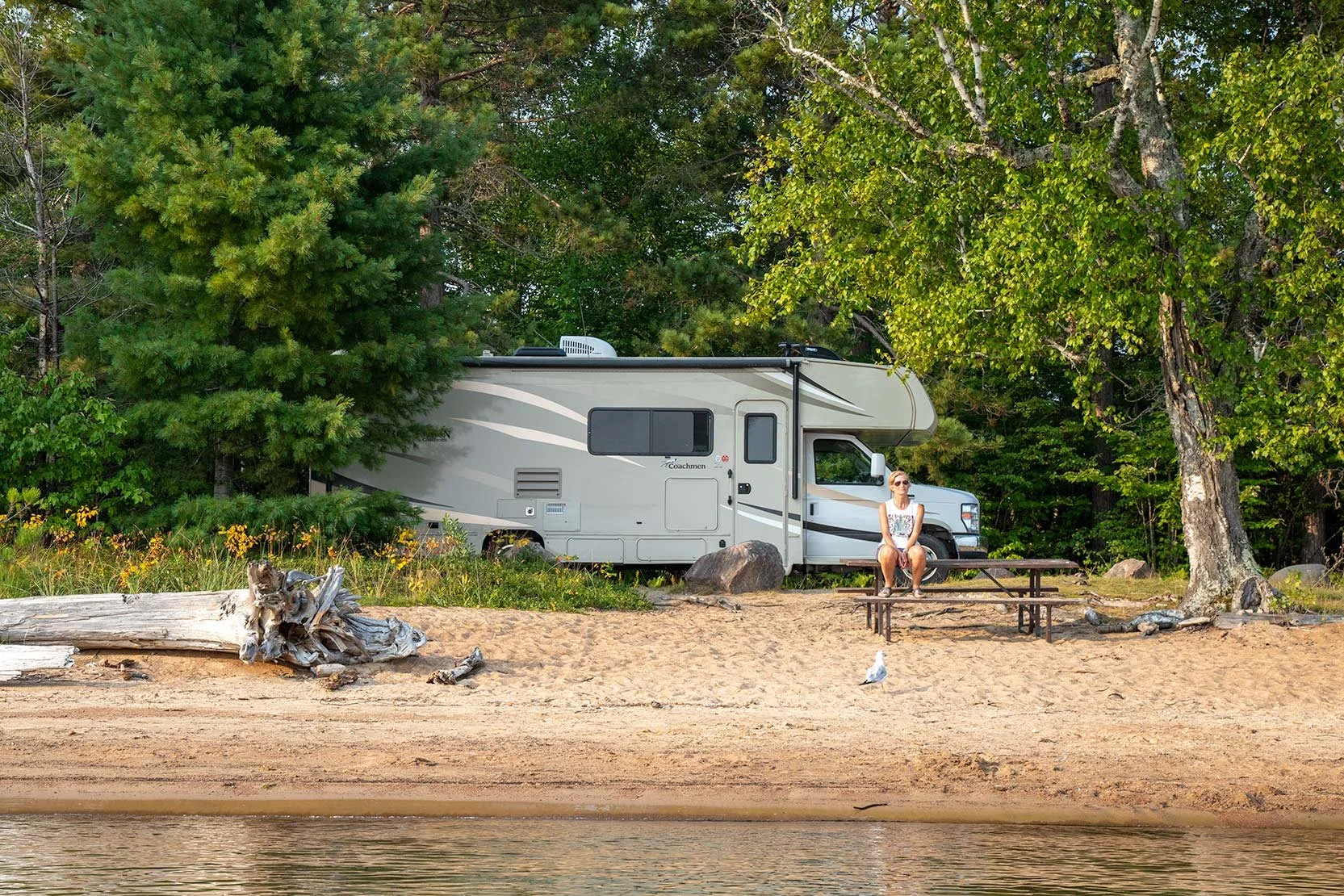
Discover the captivating beauty of Algonquin Park on this nine-day pop-up camper camping adventure, journeying from the serene Kiosk to the scenic Achray Campground and ending at the bustling Lake of Two Rivers. This detailed itinerary offers a blend of outdoor activities, iconic viewpoints, and essential stops along the way, making it a must-read for nature lovers and campers alike.